
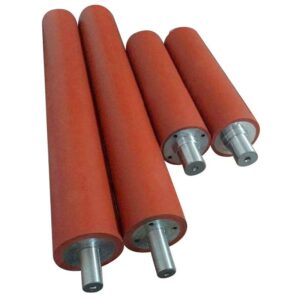
pu pressure roller
Working with PU Pressure Rollers: A Practical Guide
When you’re specifying a PU pressure roller for your production line—whether it’s for a laminator, a printing press, or a conveyor system—the material’s behaviour under load directly affects your output quality and uptime. Over the years, I’ve seen how small differences in polyurethane formulation can turn a troublesome application into a smooth, low-maintenance process. Let me walk you through what matters most, based on real workshop experience.
Key Technical Parameters You Should Know
A good quality PU pressure roller is defined by a few measurable properties. Most industrial applications work with a hardness range of Shore A 60 to 95. Softer rollers (60–75A) provide better conformability and are ideal for delicate surfaces like coated paper or films. Harder rollers (85–95A) resist deformation under high nip pressures and are common in heavy-duty material handling. Typical tensile strength for cast polyurethane used in pressure rollers sits between 40 and 50 MPa, with an elongation at break of 300–500%. Abrasion resistance is a real highlight: a well‑made PU pressure roller shows a DIN abrasion loss of less than 0.03 cm³ per 1.61 km – that’s roughly three to five times better than natural rubber under similar conditions.
Another often‑overlooked value is rebound resilience. Many PU pressure roller compounds offer 55–65% rebound, which reduces vibration and heat build‑up when running at speeds above 100 m/min. Operating temperature range is typically -20°C to +80°C; special heat‑resistant grades can go up to 110°C for short periods, but that’s a custom request.
Real‑World Advantages Over Traditional Rollers
Longer service intervals – In a corrugated box laminating line, replacing a rubber pressure roller every six months was common. Switching to a quality PU pressure roller extended that to 18–24 months, with consistent nip pressure across the web.
Chemical & oil resistance – Polyurethane stands up to mineral oils, greases, and many solvents that quickly degrade rubber or PVC rollers. I’ve seen PU pressure rollers used for years in hydraulic oil‑soaked environments without swelling or softening.
Minimal debris buildup – A smooth, non‑porous surface means less adhesive or ink accumulation. Operators spend far less time cleaning the roller surface, which reduces downtime and scrap.
Better load distribution – The elastic modulus of polyurethane can be tailored to maintain a uniform pressure footprint, even when the shaft deflects slightly under load. This directly improves bond strength in lamination and print registration.
Common Applications & Selection Tips
Where does a PU pressure roller truly shine? From my notes over the past decade:
Lamination & coating machines – Used as the upper or lower nip roller to apply uniform pressure for bonding films, foils, or adhesives. For widths beyond 1.5 m, specify a roller with a slight crown (0.2–0.5 mm) to compensate for deflection.
Printing presses (flexo/offset) – As a pull‑roller or impression roller, PU delivers high friction without marking the substrate. Hardness of 75–80A is a safe starting point for paper and cardboard.
Material handling & conveyors – Drive rollers, tension rollers, and snub rollers benefit from PU’s high tear strength and resistance to impact. In a palletiser infeed, a PU pressure roller lasted 2.5× longer than a steel‑covered roller and never scratched the loads.
Food packaging equipment – FDA‑compliant polyurethane grades are available, offering non‑marking and easy sanitation. Many snack food lines now specify white PU pressure rollers for direct product contact.
Making the Right Choice: Customisation Matters
No two production environments are identical. The exact diameter, shaft material (steel, stainless or aluminium), surface finish (smooth, grooved or textured), and polyurethane chemistry should be matched to your line speed, temperature, and media. That’s exactly where a factory with flexible engineering capabilities becomes valuable. For instance, ZHXPRECI | China OEM/ODM Factory Supplier Custom Elastomer Wheels & Rollers offers everything from single‑piece prototyping to batch production of 10,000+ units, with full material certificates and dimensional reports. They can adjust hardness within ±2 Shore A, embed metal cores with any keyway or spline, and even produce rollers with a conductive polyurethane layer for static dissipation.
China’s manufacturing ecosystem for industrial rollers has matured considerably. Component makers there now combine automated casting lines with ISO 9001:2015 quality systems, and they routinely export to Europe, North America and Southeast Asia. Lead times for custom PU pressure rollers are often as short as 10–15 working days, including tooling for non‑standard diameters. This agility, paired with strict adherence to international standards like DIN 53505 for hardness and ASTM D2240 for resilience, makes Chinese sourcing a reliable option for both OEMs and replacement buyers.
Maintenance Tips from the Workshop Floor
A few simple habits will maximise the life of your PU pressure roller:
Clean after every shift – Use a soft nylon brush and mild detergent. Avoid solvents containing ketones or aromatic hydrocarbons (acetone, toluene, xylene) – they can swell the polyurethane.
Inspect the ends – Most premature failures start at the roller ends due to bearing misalignment. Check that bearings spin freely and that the housing doesn’t transfer excessive axial load.
Store spare PU rollers horizontally – Never lean them against a wall. Support the entire shaft or hang them via the bearing journals. Direct sunlight or ozone from electric motors degrades polyurethane; keep them covered in a cool, dry storage area.
Measure surface hardness annually – A drop of 5–8 Shore A over two years is normal. If it changes more rapidly, review your operating temperature or chemical exposure.
Quick Comparison: PU vs. Rubber vs. Nylon Pressure Rollers
PU vs. Rubber – PU offers 3–5× better abrasion resistance and higher load capacity without permanent compression set. Rubber is cheaper but requires frequent replacement, especially with oils present.
PU vs. Nylon – Nylon is very hard (Rockwell R scale) and does not conform to uneven webs. PU provides a resilient surface that absorbs shocks, making it far more suitable for pressure‑sensitive applications like laminating thin foil.
PU vs. Urethane (thermoset vs. thermoplastic) – Cast thermoset polyurethane is the standard for pressure rollers because it bonds permanently to the metal core and resists creep under prolonged nip load. Thermoplastic urethane (TPU) is easier to injection‑mould but tends to soften at moderate temperatures (above 60°C).
In summary, a well‑engineered PU pressure roller reduces maintenance costs, improves process consistency, and can be precisely tailored to your line’s requirements. Whether you need a single replacement roller or a long‑term supply of custom sizes, working with an experienced manufacturer that understands both material science and practical application will save you countless headaches. The combination of polyurethane’s inherent strengths and China’s efficient, quality‑focused roller production has made high‑performance pressure rollers accessible to factories of all sizes. Take the time to document your actual nip load, speed, and chemical environment – then choose a PU pressure roller that matches those real‑world conditions, and you’ll see the benefits from the first production shift.
全13件を表示
-
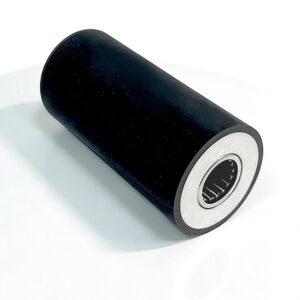
Black PU Rubber Coated Wheel Roller Industrial Grade for Automation Machinery Conveyor Transport and Factory Use
続きを読む -
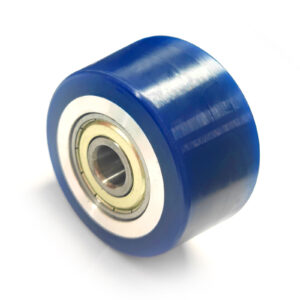
Blue Customized Silicone Rubber Coated Roller & High Quality Drive Guide Roller
続きを読む -
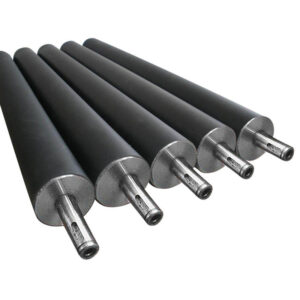
Customized Agricultural Machinery Rubber Wheel Harvester Silicone Roller Cotton Machine Press Roller Pu Wheel Rubber Roller
続きを読む -
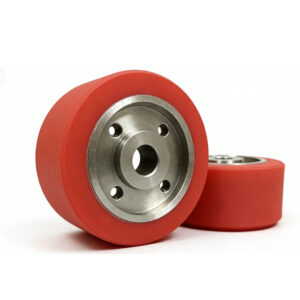
Customized Silicone Rubber Coated Roller & China Factory OEM/ODM Drive Guide Roller
続きを読む -
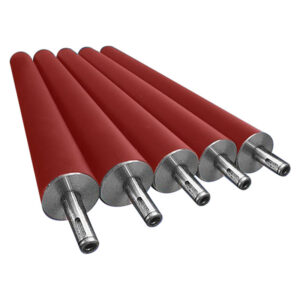
Customized Unpowered PU Wheel Assembly Line Conveyor Wheel Steel Mechanical Pressure Roller Transmission Roller Cutting
続きを読む -
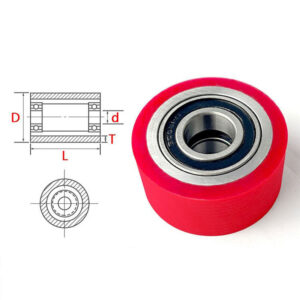
High-Temperature Resistant Durable Silicone Wheels & Quiet, Smooth, and Contamination-Free Movement Silicone Castor Wheel Roller
続きを読む -
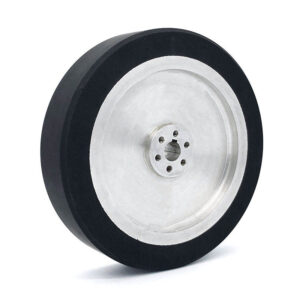
Polyurethane Rubber Coated Wheel for Factory Conveyor Systems and Industrial Transport Silicone Wheel
続きを読む -
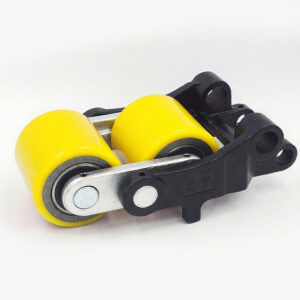
Polyurethane Silicone Rubber Wheel for Printing Machine Feeding Unit and Packaging Line Transport
続きを読む -
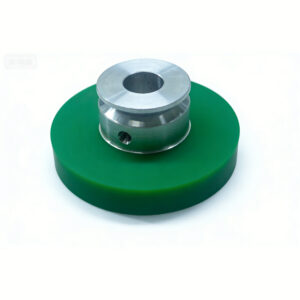
PU Rubber Coated Wheel Roller Industrial Grade for Automation Machinery Conveyor Transport and Factory Use
続きを読む -
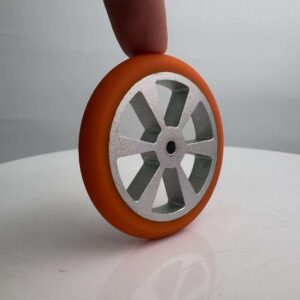
Robot Wheels Intelligent Car Load-resistant Wheels Aluminum Alloy Rubber Polyurethane Tire DIY Robot Competition Wheels
続きを読む -
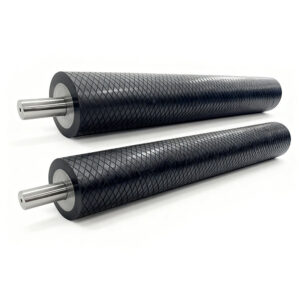
カスタム工業用コーティングローラー – コンベア・印刷機器向けポリウレタン/ゴムローラー
続きを読む -
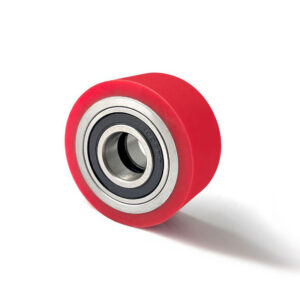
工場コンベヤシステムおよび産業用コンベヤ輸送向けカスタムポリウレタンコーティングホイール
続きを読む -
平滑表面耐熱シリコーンロール – ラベル印刷・プラスチックフィルムラミネート用
続きを読む