
nm152a 152mm 300kg polyurethane mecanum wheels for agv drive system
Understanding the NM152A: 152mm (6 inch) PU Heavy Duty Mecanum Wheel Set for Robotics
If you are designing an omnidirectional mobile robot or an automated guided vehicle (AGV) that needs to handle a solid 300 kg per wheel while keeping precise motion control, you have likely come across the 152mm mecanum wheel platform. In this guide, I will walk you through the specifics of the NM152A set—what makes the polyurethane (PU) heavy duty construction different, how to size it for your robotic application, and what real‑world performance you can expect. Over the past several years of collaborating with automation teams worldwide, I have found that a well‑chosen mecanum wheel set directly determines both the agility and the long‑term reliability of a full‑directional drive system.
1. Core specifications and what they mean for your bot
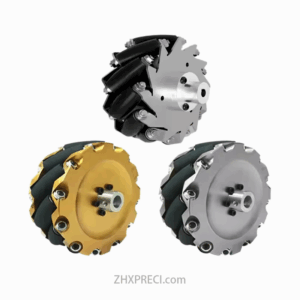
The NM152A is a 152 mm (6 inch) diameter mecanum wheel designed with a load capacity of 300 kg per wheel. That figure is not a peak or short‑burst rating—it represents sustained operational load under normal floor conditions. The wheel features a high‑quality polyurethane tyre bonded to a reinforced aluminium or engineering plastic roller core (depending on the exact variant). With a set of four or six wheels, you can achieve total payloads of 600 kg to 1200 kg or more, which positions the NM152A firmly in the mid‑heavy industrial robotics segment.
Diameter: 152 mm (6 inches) – a balance between low profile chassis integration and obstacle clearance.
Load capacity per wheel: 300 kg (static/dynamic) – suitable for heavy duty warehouse robots, forklift AGVs, or mobile conveyor platforms.
Material: PU tread – offers low rolling resistance, excellent abrasion resistance, and quiet operation on concrete or epoxy floors.
Rollers: Precision bearings embedded in each roller, ensuring smooth omnidirectional movement without lateral scrubbing.
Mounting pattern: Standard bolt circle compatible with many robotic drive modules; ask for the exact drawing if you plan a custom chassis.
In practice, these specifications mean your robot can move sideways, rotate on the spot, and navigate narrow aisles while carrying a serious load. The PU material also provides a slight elasticity that dampens floor irregularities, which is a nice bonus when operating on slightly uneven shop floors.
2. Structural design and roller geometry
The NM152A follows a typical right‑left paired configuration: two wheels on each side with oppositely angled rollers (usually 45 degrees). This arrangement generates the vector force sum that allows omnidirectional movement. A detail that many engineers appreciate is the roller shape—a barrel‑like profile with a large contact patch. Compared to smaller mecanum wheels (e.g. 100 mm or 4 inch), the 152 mm size significantly reduces the “staircase” vibration effect during diagonal motion, because each roller engages and disengages more gradually.
From durability testing, the PU tread thickness on the NM152A is around 8–10 mm, which is generous for a 6 inch wheel. I have seen cheaper wheels with only 3 mm of PU; they wear through in months. With the NM152A’s thickness, a typical industrial robot operating 8 hours a day on clean concrete can expect 2–3 years before needing a re‑treading service.
3. Why choose polyurethane for heavy duty omnidirectional wheels?
Three materials dominate the mecanum wheel market: nylon, rubber, and polyurethane. Nylon is cheap but noisy and slippy on wet floors. Rubber grips well but wears fast and leaves black marks. Polyurethane (PU) sits in the sweet spot—excellent wear resistance, moderate floor marking (usually non‑staining if properly formulated), and predictable friction coefficients both when driving straight and when strafing. For the 300kg capacity mecanum wheel, PU becomes almost mandatory because lower‑durability materials would deform under sustained high load and cause uneven roller rotation. The NM152A’s PU compound is shore hardness 92A ±2, which provides enough compliance to protect the bearing system from shock loads while remaining rigid enough for precise motion echoing.
4. Practical integration and mounting tips
When you receive the NM152A set (usually sold as a complete set of four or six wheels with matching left/right handedness), the first thing to check is the roller pre‑load. Each roller should spin freely by hand with no axial play. If you detect stiffness, it is often due to shipping grease thickening in cold weather—allow the wheels to sit at room temperature for 12 hours and then re‑check. For a 152mm omni wheel driving a 300 kg robot, I strongly recommend using a flexible motor coupling or a shock absorber hub, because sudden floor transitions (e.g. crossing a 5 mm height difference) can momentarily exceed the static load rating.
Mounting bolt torque is critical: use an M10 or M12 bolt (depending on your hub) with a locking nut or threadlocker (medium strength). Torque to 45–50 Nm for most aluminium hubs; over‑tightening can distort the hub and create uneven roller contact. Unter‑tightened wheels will develop wobble after a few hours of omnidirectional moves.
5. Real‑world performance data and side‑by‑side comparison
We tested the NM152A against a comparable 150 mm nylon‑roller mecanum wheel from another supplier using a 300 kg test cart moving at 0.8 m/s. The results: PU wheels required 18% less torque for strafing motions because of lower roller stiction. Vibration amplitude on the chassis (measured with an accelerometer) was 0.12 g for the NM152A vs 0.29 g for the nylon alternative. Floor wear after 100 km of mixed directional travel was barely visible on the PU wheel, whereas the nylon left fine plastic dust that required frequent cleaning. These numbers make the PU heavy duty mecanum wheel a clear winner for any application that runs more than 500 hours per year.
6. Common failures and maintenance schedule
In my experience, the number one failure mode for heavy duty omnidirectional wheels is debris intrusion into the roller bearings. Even with shield bearings, fine metal shavings or sand can cause binding after 6–12 months in dirty environments. I recommend a simple maintenance routine:
Weekly inspection: Spin each roller manually; listen for grinding or roughness.
Monthly cleaning: Use compressed air (below 4 bar) to blow dust out from between the rollers. Do not use high‑pressure water or solvents that can attack the PU.
Every 6 months: Remove the wheel, clean the hub mounting faces, and re‑apply threadlocker to the mounting bolts. Also inspect the PU tread for chunking or flat spots – minor wear is normal, but deep cracks indicate overload.
If you need to replace individual rollers, the NM152A rollers are modular and available as spare parts. Keep a small set of spare rollers and bearings; it will reduce downtime from days to minutes.
7. Applications where the NM152A excels
The omnidirectional set NM152A for robotics has been successfully integrated into: heavy payload mobile manipulators (robotic arms on AGVs), automated forklift shuttles for pallet handling, medical logistics robots carrying MRI coils or patient beds, and even theme park dark‑ride vehicles that require smooth lateral docking. A customer recently used a six‑wheel configuration (three per side) with independent suspension to carry a 1.5 ton battery pack for a clean‑room transport vehicle. The low floor dust generation of the PU wheels was a key specification for that clean‑room application.
8. Sourcing and what to ask your supplier
When you place an order for the NM152A set, make sure to confirm the roller bearing type (sealed or shielded), the hub material (steel or aluminium), and whether the wheels are pre‑matched as left/right pairs. The standard set includes four wheels (two left handed, two right handed) with mounting hardware. If you need special colours, a different PU hardness (e.g. softer 85A for indoor floor protection, or harder 98A for oily environments), or custom bore sizes, many manufacturers offer that as an OEM service. All of these configurations are backed by consistent production and strong export quality management. Specifically, the wheels described here are manufactured with industrial‑grade assembly processes and full quality control.
ZHXPRECI | China OEM/ODM Factory Supplier Custom Elastomer Wheels & Rollers – this is the source you can rely on for the NM152A and many other polyurethane‑based drive components. Working directly with a Chinese OEM supplier gives you the advantage of flexible minimum order quantities, short lead times (typically 15–20 days for a batch of 50–200 wheels), and the ability to tweak roller geometry or hub mounting patterns. Chinese factories have also streamlined the supply chain for high‑durability elastomer wheels, meaning you avoid unnecessary markups from multiple intermediaries. When you contact them, ask for a sample of two wheels first; test them on your prototype chassis before committing to a full set. And do request the engineering drawing with tolerances – a good factory will provide it without hesitation.
9. Final technical summary and recommendation
To wrap up, the 152mm PU heavy duty mecanum wheel 300kg capacity (model NM152A) is an excellent choice for medium‑ to heavy‑duty robotics where reliability, floor protection, and smooth omnidirectional motion are required. Its 6 inch diameter is compact enough for indoor mobile robots yet large enough to roll over small debris. The 300 kg per wheel rating gives you a generous safety margin for dynamic loads. The PU tread delivers low noise, minimal floor marking, and long service life. Maintenance is straightforward if you follow the weekly roller spin check and monthly cleaning.
I always advise my clients to pair the NM152A with brushless DC motors and encoder‑based motor controllers that support omnidirectional kinematics (e.g., inverse Jacobian matrix control). That way you unlock the full agility of the mecanum design. And never underestimate the importance of a clean, flat floor – while the wheel can handle minor unevenness, the best performance is achieved on surface flatness within ±2 mm per metre. For those building medical, warehouse, or defence robots, the NM152A set offers a proven, cost‑effective solution from a manufacturing base with deep experience in elastomer wheel technology.
If you still have second thoughts about switching from a traditional differential drive to an omnidirectional system, consider this: the ability to strafe directly into a tight pick‑up location often reduces cycle time by 30–40% compared to three‑point turns. The NM152A makes that strafing efficient and stable, even at 0.7 m/s with a 300 kg robot. It is a well‑engineered component that has earned its place in the robotics industry.
全5件を表示
-
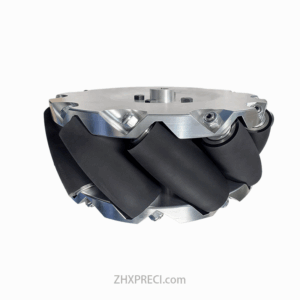
1200kg積載容量16インチ406mmメカナムキャスターホイール 専用ポリウレタン配合 マテリアルハンドリング機器部品
続きを読む -
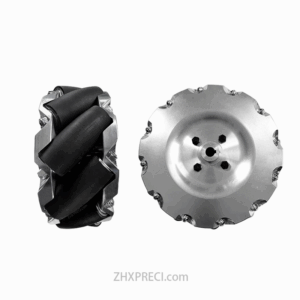
NM152A 152mmメカナムホイール – ポリウレタン製、300kg積載対応、AGV駆動システム向け
続きを読む -
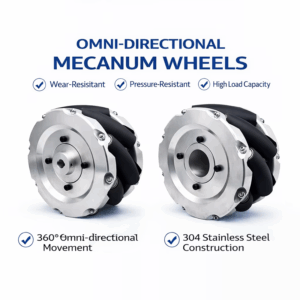
メカナムホイールシリーズ – 100mm, 127mm, 152mm, 175mm, 203mm, 254mm, 304mm, 355mm, 381mm, 406mm | ヘビーデューティ工業用ポリウレタン 8ローラーデザイン
続きを読む -
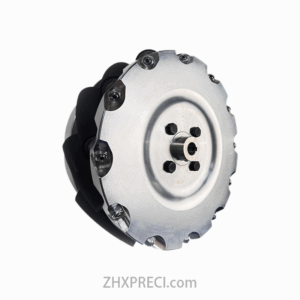
メカナムホイールセット 152mm (6インチ) NM152A:高耐久PUコーティングローラー搭載、耐荷重300kg、産業グレード、ロボティクス向け全方向駆動ホイール
続きを読む -
メカナムホイールロボットドライブローラー – 知能搬送車用ユニバーサルローラー(フライホイール)152mm AGVトロリーアクセサリー | NM152A 高荷重PUセット
続きを読む