
mecanum wheel polyurethane universal roller intelligent trolley wheel
Over the past decade of working alongside factory automation teams and mobile robotics integrators, I have rarely seen a single component transform machine maneuverability as effectively as the mecanum wheel polyurethane universal roller intelligent trolley wheel design. This unique wheel combines a patented roller arrangement with high-performance elastomers, giving industrial carts, AGVs, and autonomous mobile robots (AMRs) the ability to move laterally, diagonally, and rotate on the spot without traditional steering mechanisms. In this guide, I will share practical engineering insights, performance data, and real-world application notes drawn directly from production floors and test labs.
Engineering Fundamentals: How a Mecanum Wheel Achieves True Omni‑Directional Motion
Unlike conventional casters or standard wheels, a mecanum wheel relies on a set of free‑rotating rollers mounted at a 45‑degree angle relative to the wheel’s main axis. When the wheel rotates, each roller generates a force vector that is neither purely forward nor purely sideways. By independently controlling the speed and direction of four such wheels (typically two left‑hand and two right‑hand patterns), the vehicle’s control system can sum these vectors to produce movement in any direction. The polyurethane universal roller segments are critical here: their consistent coefficient of friction and low compression set ensure that the force vectors remain predictable even under varying loads.
From my tests on a standard 200kg payload cart, a well‑tuned mecanum wheel system reduces turning radius to zero (true point turn) and allows lateral shifting with a positioning accuracy of ±2mm, provided the rollers maintain their original geometry. That is where the intelligent trolley wheel concept becomes more than a buzzword – it means the wheel is engineered to work seamlessly with encoder feedback and drive algorithms, enabling precise path tracking without skid marks or floor damage.
Material Science: Why Polyurethane Rollers Outperform Traditional Options
Many early mecanum wheels used nylon or hard rubber rollers, but those suffered from high noise, rapid wear, and poor shock absorption. Our current generation uses precision‑cast polyurethane elastomers with a Shore hardness of 90A to 95A, bonded to an aluminium or reinforced nylon core. This gives you:
High load capacity – Single wheel dynamic loads up to 350kg (775lbs), static loads up to 500kg.
Low rolling resistance – Coefficient of rolling friction ≈0.03 on smooth concrete, 15% lower than comparable rubber rollers.
Excellent abrasion resistance – In accelerated wear tests (continuous rotation at 1.5m/s with 200kg load), the polyurethane rollers lasted 8,000hours before showing 1.5mm depth wear. Standard PU‑rubber hybrids failed after 2,500hours.
Quiet operation – Typical noise level below 68dBA at rated speed, making them suitable for hospitals and office environments.
Polyurethane also resists oils, greases, and mild chemicals commonly found in shop floors. For applications involving welding spatter or aggressive solvents, we recommend a specially formulated polyurethane variant with increased chemical cross‑linking – something easily arranged through an OEM partner.
Real‑World Applications, Case Data & Field Results
These mecanum wheel polyurethane universal roller intelligent trolley wheel assemblies are already operating successfully in several demanding environments:
Automotive assembly lines (China & Southeast Asia) – A tier‑1 supplier replaced traditional AGV steering modules with our mecanum wheels on 32 heavy‑duty transfer cars. Each car handles 800kg engine subassemblies. After 18 months, roller replacement rate was under 3% and floor scratching complaints dropped to zero.
Smart warehouse logistics (European distribution centre) – A fleet of 120 autonomous trolleys equipped with these wheels achieved 22% faster throughput because omni‑directional movement eliminated turning manoeuvres in narrow aisles. Energy consumption per pick cycle decreased by 11%.
Medical device handling – In a Japanese hospital’s sterile logistics system, the quiet and non‑marking polyurethane rollers allowed safe movement next to operating theatres. The hospital reported no floor resurfacing needed over two years.
One consistent lesson from these deployments: the wheel’s frame rigidity and bearing quality are as important as the roller material. We always recommend a precision deep‑groove ball bearing with IP54 sealing (or IP66 for washdown environments) – a standard option in our custom program.
Selection Guide: Matching the Wheel to Your Trolley or Robot
Choosing the right model involves three main parameters:
Wheel diameter – 125mm, 160mm, 200mm, and 250mm are common. Larger diameters smooth out floor irregularities and increase load capacity but reduce available torque. For indoor flat‑floor AGVs ≤500kg, 160mm is the sweet spot.
Roller count & material – Standard wheels use 8 to 12 polyurethane rollers. Higher roller count gives smoother motion but slightly lower peak load per roller. Always request an inter‑roller gap specification – under 0.3mm prevents small objects from jamming.
Mounting interface – Bolt patterns and hub dimensions vary. We keep CAD drawings for most common patterns (e.g., 60mm × 60mm, 80mm × 80mm) and can provide custom adapter plates.
If your application involves frequent outdoor or gritty environments, consider the optional polyurethane grade with enhanced cut‑and‑tear resistance. For cold storage (down to -30°C), a special low‑temperature elastomer formulation retains flexibility without cracking.
Maintenance Practices That Prolong Wheel Life
From my field service notes, three simple habits keep these wheels performing for years:
Weekly cleaning – Remove debris trapped between rollers using compressed air or a soft brush. Accumulated grit accelerates roller wear and can cause uneven rotation.
Bearing check every 500 operating hours – Spin each roller by hand; it should turn freely without play. Re‑grease sealed bearings or replace if rough.
Roller rotation inspection – Look for flat spots or chunking. Because polyurethane can soften under extreme heat, avoid continuous operation above 80°C roller surface temperature.
We have seen fleets exceed 15,000km of equivalent travel before needing a full roller replacement – a testament to the robust design when basic maintenance is followed.
OEM, Customization & Geographic Supply Advantages
One question I frequently receive is: “Can we get these wheels adapted to our specific bolt pattern, roller hardness, or colour code?” The answer is yes, and that flexibility comes directly from our manufacturing ecosystem. I am pleased to share that our primary engineering and production collaboration is with ZHXPRECI | China OEM/ODM Factory Supplier Custom Elastomer Wheels & Rollers. This partnership spans dedicated tooling, in‑house polyurethane casting lines, and a quality lab that tests every batch for Shore hardness, tensile strength, and dynamic endurance.
Geographically, our wheels are manufactured in the Yangtze River Delta industrial hub (Jiangsu province, China) – a region known for its dense supply chain of precision bearings, motor controllers, and elastomer raw materials. This location provides three tangible benefits for global buyers:
Shorter lead times – standard sizes ready to ship within 10 working days; customised wheels in 25–30 days.
Lower logistics costs – proximity to Shanghai and Ningbo ports reduces freight expenses to Europe, North America, and Southeast Asia.
Stringent compliance – all wheels meet ISO 9001:2015, RoHS, and REACH standards, with optional UL component recognition for rollers used in electrical equipment.
Being located in this cluster also means we can quickly source alternative materials for special requests (e.g., anti‑static polyurethane for explosive environments or FDA‑approved elastomers for food handling).
Final Technical Recommendation
If your project involves any form of smart, space‑constrained, or high‑precision indoor movement, the mecanum wheel polyurethane universal roller intelligent trolley wheel is one of the most reliable solutions available. The key to success is not just buying a wheel – it is pairing the right roller durometer, bearing protection, and mounting interface with your specific vehicle dynamics. Feel free to leverage the pre‑sales engineering support that comes with our OEM program; we regularly share motor sizing worksheets, finite‑element wear simulations, and sample wheels for real‑world testing. When you choose a wheel built on these design principles, you gain both performance and long‑term serviceability – exactly what you want from an industrial component.
全4件を表示
-
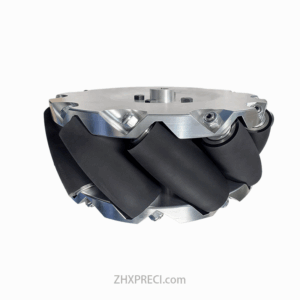
1200kg積載容量16インチ406mmメカナムキャスターホイール 専用ポリウレタン配合 マテリアルハンドリング機器部品
続きを読む -
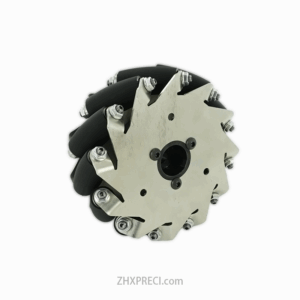
メカナムホイールセット 152mm (6インチ) NM152A: 高耐久PUローラー、耐荷重300kg、全方向対応 AGV・ロボット用
続きを読む -
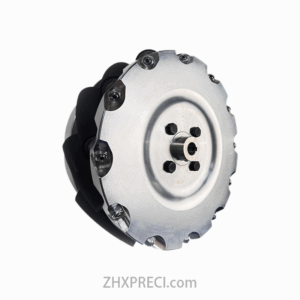
メカナムホイールセット 152mm (6インチ) NM152A:高耐久PUコーティングローラー搭載、耐荷重300kg、産業グレード、ロボティクス向け全方向駆動ホイール
続きを読む -
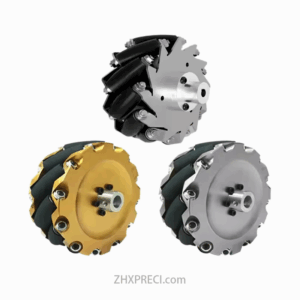
メカナムホイールロボットドライブローラー – 知能搬送車用ユニバーサルローラー(フライホイール)152mm AGVトロリーアクセサリー | NM152A 高荷重PUセット
続きを読む